

Roofing plays a vital role in protecting a building from harsh weather, heat, rain, and dust. In India, where the climate ranges from intense summer heat to heavy monsoon showers, choosing the right roofing sheets becomes even more important.
Whether you are constructing a warehouse, factory, farmhouse, commercial space, or even a modern home extension, the roofing material you select will affect durability, comfort, and long-term maintenance costs.
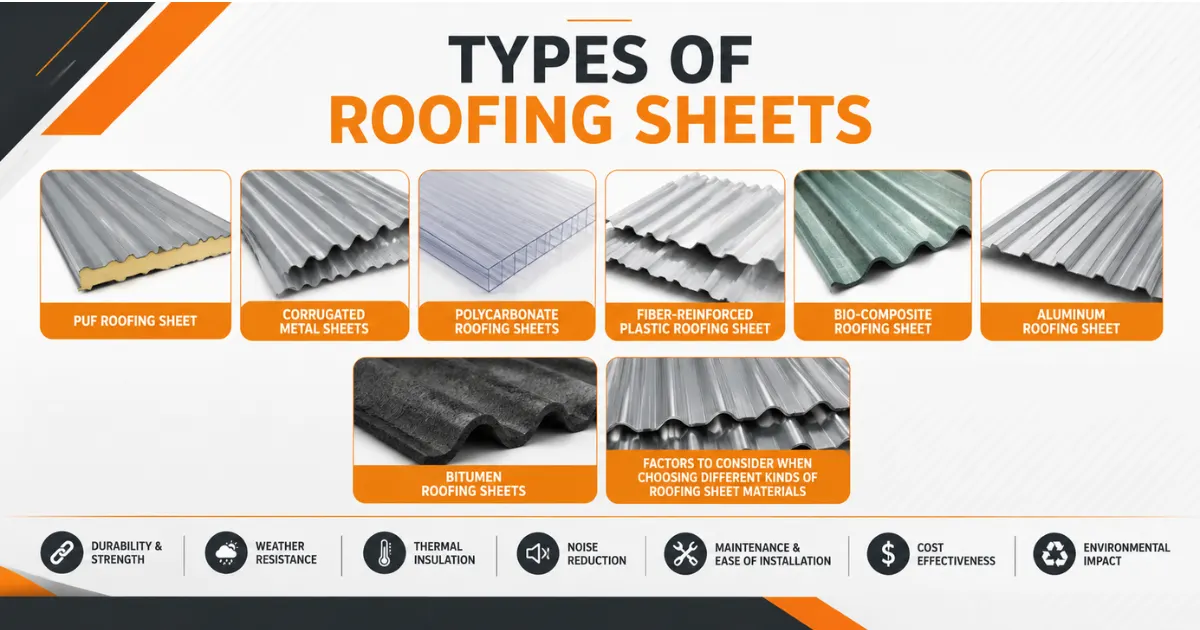
Today, the market offers a wide range of roofing sheets, each designed for specific applications. From industrial PUF panels to eco-friendly bio-composite options, every material has its own strengths and limitations.
In this guide, we will explore the most popular types of roofing sheets used in India and help you understand which one best suits your project.
PUF Roofing Sheet
PUF (Polyurethane Foam) roofing sheets are insulated panels made by placing polyurethane foam between two metal sheets. They are widely used in warehouses, factories, and cold storage facilities. These roofing sheets are known for their excellent thermal insulation and energy efficiency.
Pros:
- Excellent thermal insulation reduces indoor heat.
- Energy-efficient and lowers electricity bills.
- Strong structural stability.
- Suitable for temperature-controlled environments.
- Long lifespan with minimal maintenance.
Cons:
- Higher initial cost compared to standard sheets.
- Requires professional installation.
- Slightly heavier than single-layer sheets.
- Not ideal for very small residential projects.
- Repairs can be costly if damaged.
Corrugated Metal Sheets
Corrugated metal sheets are among the most common roofing sheets in India. Made from galvanised steel or iron, their wavy pattern improves strength and load-bearing capacity. They are widely used in industrial sheds, rural houses, and temporary structures.
Pros:
- Affordable and easily available.
- Strong and impact-resistant.
- Quick and simple installation.
- Suitable for large industrial spaces.
- Long-lasting with proper coating.
But material type alone doesn’t determine how well the roof performs under stress — gauge selection is equally critical, especially for wide-span industrial structures where thin sheets can sag over time.
Cons:
- Can become very hot during summer.
- Prone to rust if the coating is damaged.
- No built-in insulation.
- Can be noisy during heavy rain.
- Limited aesthetic appeal.
Polycarbonate Roofing Sheets
Polycarbonate roofing sheets are lightweight and transparent or translucent. They allow natural light to pass through, making them ideal for skylights, balconies, and car parking sheds. These sheets are popular in modern architectural designs.
Pros
- High impact resistance.
- Allows natural daylight indoors.
- Lightweight and flexible.
- UV-resistant options are available.
- Modern and attractive appearance.
Cons
- More expensive than metal sheets.
- Can scratch easily.
- May discolour over time.
- Limited thermal insulation.
- Not ideal for heavy load-bearing roofs.
Fiber-Reinforced Plastic Roofing Sheet
Fibre Reinforced Plastic (FRP) roofing sheets are made by combining plastic with reinforcing fibres for added strength. These sheets are commonly used in industrial buildings and coastal areas due to their corrosion resistance.
Pros
- Corrosion and chemical resistant.
- Lightweight and easy to handle.
- Suitable for humid environments.
- Good durability.
- Low maintenance requirements.
Cons
- Can become brittle over long periods.
- Limited aesthetic options.
- Slightly higher cost than standard metal sheets.
- May lose clarity in translucent variants.
- Not as strong as heavy-gauge steel sheets.
Bio-Composite Roofing Sheet
Bio-composite roofing sheets are eco-friendly materials made from natural fibres and polymer resins. They are gaining popularity in sustainable construction projects and green buildings across India.
Pros
- Environmentally friendly option.
- Lower carbon footprint.
- Lightweight structure.
- Good insulation properties.
- Suitable for eco-resorts and farmhouses.
Cons
- Limited market availability.
- May have a higher upfront cost.
- Durability varies by manufacturer.
- Less commonly used in heavy industrial projects.
- Requires proper sealing for water resistance.
Aluminum Roofing Sheet
Aluminium roofing sheets are known for their corrosion resistance and long lifespan. They are commonly used in coastal areas and industrial buildings where rust prevention is essential.
Pros
- Excellent rust resistance.
- Lightweight yet durable.
- Reflects heat effectively.
- Long service life.
- Low maintenance.
Cons
- More expensive than steel sheets.
- Can dent under heavy impact.
- Limited sound insulation.
- Requires proper support structure.
- Expansion and contraction in extreme temperatures.
Bitumen Roofing Sheets
Bitumen roofing sheets are made from asphalt-based materials and are mainly used for low-slope roofs, garages, and small structures. They are known for their waterproofing properties.
Pros
- Excellent water resistance.
- Affordable roofing option.
- Flexible and easy to install.
- Suitable for monsoon-prone regions.
- Good sound absorption during rain.
Cons
- Shorter lifespan compared to metal sheets.
- Can soften under extreme heat.
- Limited aesthetic appeal.
- Not ideal for large industrial projects.
- Requires periodic maintenance.
Factors to Consider When Choosing Different Kinds of Roofing Sheet Materials
Selecting the right roofing sheets involves more than just comparing prices. Several important factors should guide your decision.
Climate Conditions
India’s climate varies widely. For hot regions, insulated or reflective sheets like PUF and aluminium are ideal. In coastal areas, corrosion-resistant materials such as aluminium or FRP work best.
Budget and Long-Term Costs
Initial cost is important, but so is durability. Investing slightly more in high-quality roofing sheets reduces maintenance and replacement costs in the future.
Purpose of the Building
Industrial buildings may require strong and insulated roofing. Residential spaces might prioritise aesthetics and natural lighting. Understanding your building’s purpose helps narrow down options.
Installation and Maintenance
Some roofing sheets are easier and faster to install. Consider labour costs and the availability of skilled installers. Also, check maintenance requirements.
Energy Efficiency
With rising electricity costs in India, energy-efficient roofing materials are gaining importance. Insulated roofing sheets can significantly reduce cooling expenses.
Conclusion
Choosing the right roofing sheets is crucial for the safety, comfort, and longevity of your building. From highly insulated PUF roofing sheets to cost-effective corrugated metal sheets, each type serves a unique purpose. Polycarbonate sheets offer natural lighting, FRP sheets resist corrosion, bio-composite sheets support sustainability, aluminium sheets provide durability, and bitumen sheets ensure waterproofing.
Before making a final decision, assess your budget, climate conditions, and building requirements. A well-informed choice will not only protect your structure but also improve energy efficiency and reduce long-term maintenance costs.