

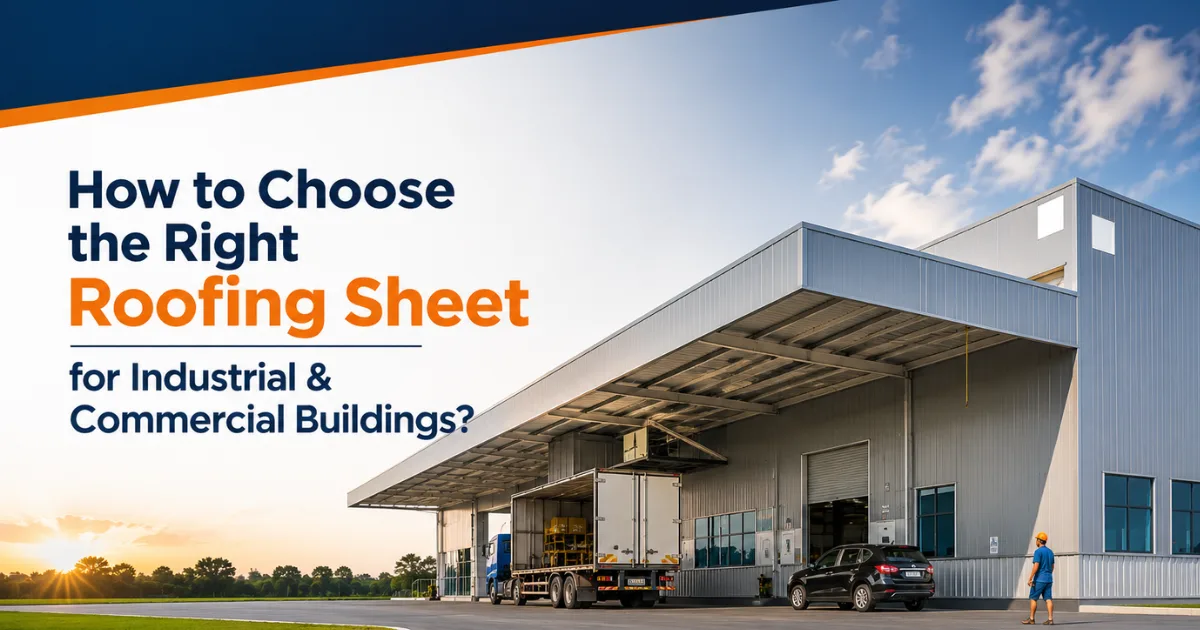
A roof does much more than cover a building. It protects machinery, stock, employees, and daily operations from harsh weather, heat, moisture, and external damage. The right roofing system also improves energy efficiency, reduces maintenance costs, and increases the life of the structure.
Today, businesses have several roofing options available in the market. However, selecting the best roofing sheet for industrial and commercial building projects requires careful planning. Factors such as climate, durability, insulation, and material quality all play a major role in long-term performance.
This guide explains the key factors to consider, the common roofing sheet types available, and the best practices that help businesses make the right decision for their property.
Key Considerations for Choosing the Right Roofing Sheet for Industrial and Commercial Buildings
Selecting the ideal roofing sheet is not only about price. Industrial and commercial buildings require roofing systems that can withstand demanding conditions for years. Understanding the important factors before investing can help avoid costly repairs and replacements later.
Weather Conditions & Climate
Weather is one of the biggest factors when selecting a roofing sheet for industrial and commercial building projects. In India, roofs are exposed to intense sunlight, heavy rain, humidity, and strong winds depending on the region. A roofing material that performs well in one climate may not perform as well in another.
For hot regions, heat-reflective roofing sheets help maintain cooler indoor temperatures and reduce energy consumption. In coastal areas, corrosion-resistant materials are essential because salty air can damage ordinary metal roofs over time. Areas with heavy rainfall require roofing sheets with proper drainage and leak-resistant design to prevent water accumulation and structural damage.
Choosing a roofing sheet according to local weather conditions improves durability and ensures better long-term performance.
Material Strength & Load-Bearing
Industrial and commercial roofs often carry additional loads such as solar panels, HVAC systems, water tanks, or maintenance traffic. It makes strength and load-bearing capacity extremely important while selecting the roofing material.
A high-quality roofing sheet for industrial and commercial building structures should withstand external pressure without bending, cracking, or losing its shape. Strong roofing materials also provide better resistance against storms, falling debris, and temperature-related expansion.
Buildings with larger roof spans, especially, require roofing sheets that offer structural stability while keeping overall building weight manageable. Choosing durable and load-resistant roofing sheets reduces the risk of future repairs and improves workplace safety.
Thermal & Acoustic Insulation
Temperature control is a major concern in warehouses, factories, production units, and commercial spaces. Poor roofing can significantly raise indoor temperatures, leading to higher electricity bills and uncomfortable working conditions.
Modern roofing sheets with thermal insulation properties help maintain balanced indoor temperatures. They reduce heat transfer from direct sunlight and improve energy efficiency throughout the year. It is particularly important for industries that store temperature-sensitive products or operate heavy machinery.
Acoustic insulation is equally valuable in industrial environments. Roofing sheets that minimise external noise and reduce sound transmission create a quieter, more productive workspace. Proper insulation also improves employee comfort and overall operational efficiency.
Lifespan and Maintenance
Every business prefers roofing systems that offer long-term value with minimal maintenance. Frequent repairs not only increase expenses but can also interrupt daily operations.
A reliable roofing sheet for industrial and commercial building applications should provide durability, weather resistance, and low maintenance requirements. Materials with anti-corrosion coatings, UV resistance, and strong structural integrity generally last longer and perform better over time.
Easy maintenance is another important factor. Roofing sheets that are simple to clean and inspect help businesses avoid unnecessary downtime and repair costs. Investing in high-quality roofing materials initially often proves more cost-effective in the long run.
Common Types of Roofing Sheets
Different industrial and commercial projects require different roofing solutions. Understanding the commonly used roofing sheet types can help businesses select the right option based on performance, budget, and application.
Metal Roofing Sheets
Metal roofing sheets are among the most widely used options for industrial and commercial buildings. They are known for their durability, strength, and long service life. Materials such as galvanised steel and aluminium offer excellent resistance against harsh weather conditions and external impact.
Metal roofing sheets are also lightweight compared to many traditional roofing materials, making installation faster and more efficient. Modern coated metal sheets also offer improved corrosion resistance and thermal performance.
These roofing sheets are ideal for factories, warehouses, manufacturing units, and commercial complexes that require dependable long-term roofing solutions.
Polycarbonate Sheets
Polycarbonate roofing sheets are commonly used in areas where natural light is important. These sheets are transparent or translucent, allowing sunlight to enter the building while still providing weather protection.
They are lightweight, impact-resistant, and suitable for structures such as commercial walkways, skylights, parking sheds, and industrial sections requiring daylight access. Polycarbonate sheets also offer good UV protection and can withstand varying weather conditions.
Although they are not typically used for complete industrial roofing systems, they are highly effective when combined with other roofing materials in specific applications.
Fibre Cement Sheets
Fibre cement roofing sheets are known for their durability and heat resistance. These sheets are made using cement reinforced with fibres, which improves strength and overall performance.
One of the major advantages of fibre cement sheets is their thermal insulation capability. They help maintain cooler indoor conditions and are suitable for industrial units operating in high-temperature environments. They also provide better sound insulation than many metal roofing options.
In addition, fibre cement sheets are resistant to moisture, pests, and fire, making them a practical choice for many commercial and industrial applications.
Decking Sheets
Decking sheets are widely used in modern industrial and commercial construction due to their structural efficiency and installation speed. These sheets are generally used as a base layer for roofing and flooring systems.
They provide excellent load-bearing strength while keeping the overall structure lightweight. Decking sheets are commonly used in multi-storey commercial buildings, warehouses, factories, and large industrial facilities.
Their design allows for quick installation and effectively supports concrete structures. Many modern projects prefer decking sheets because they improve construction efficiency without compromising durability.
Best Practices for Selection
Even after choosing the right material, proper selection practices are essential to ensure long-lasting roofing performance. Paying attention to product quality and supplier reliability helps businesses avoid future complications.
Check Coating Quality
Protective coating plays a major role in the lifespan of roofing sheets. High-quality coatings improve resistance against corrosion, moisture, UV rays, and environmental damage.
Before purchasing roofing sheets for industrial and commercial building projects, it is important to review the coating specifications carefully. Poor-quality coatings may fade, peel, or rust quickly, especially in humid or coastal regions.
Premium-coated roofing sheets maintain their appearance and structural performance for much longer, significantly reducing maintenance costs.
Verify Thickness
Roofing sheet thickness directly affects durability, strength, and performance. Thicker sheets generally provide better load-bearing capacity and improved resistance against bending or external impact.
However, thickness requirements vary depending on the building type and roofing application. Industrial facilities with larger roof spans or heavy equipment installations may require stronger and thicker roofing sheets.
Businesses should always verify technical specifications and ensure the selected roofing sheet meets the project’s structural requirements. Choosing the correct thickness improves safety and extends roof life.
Supplier Selection
Selecting the right supplier is just as important as choosing the roofing material. A trusted supplier ensures product quality, proper certifications, and reliable after-sales support.
Experienced roofing suppliers can also guide businesses in choosing the most suitable roofing solutions based on climate, building design, and operational needs. This helps avoid incorrect material selection and future performance issues.
Working with a reputed supplier ensures better product consistency, timely delivery, and professional support throughout the project.
Conclusion
The right roofing solution is essential for the safety, efficiency, and long-term performance of industrial and commercial buildings. The ideal roofing system should offer durability, weather resistance, insulation, and low maintenance while meeting the property’s structural needs.
From metal roofing sheets to fibre cement and decking sheets, every option offers unique advantages depending on the project requirements. Careful evaluation of climate conditions, material strength, coating quality, and supplier reliability helps businesses make informed decisions.
Investing in the right roofing sheet for industrial and commercial building projects not only protects the structure but also improves operational efficiency and reduces long-term expenses.
A well-planned roofing choice ensures reliable performance for years while supporting the business’s overall growth and productivity.