

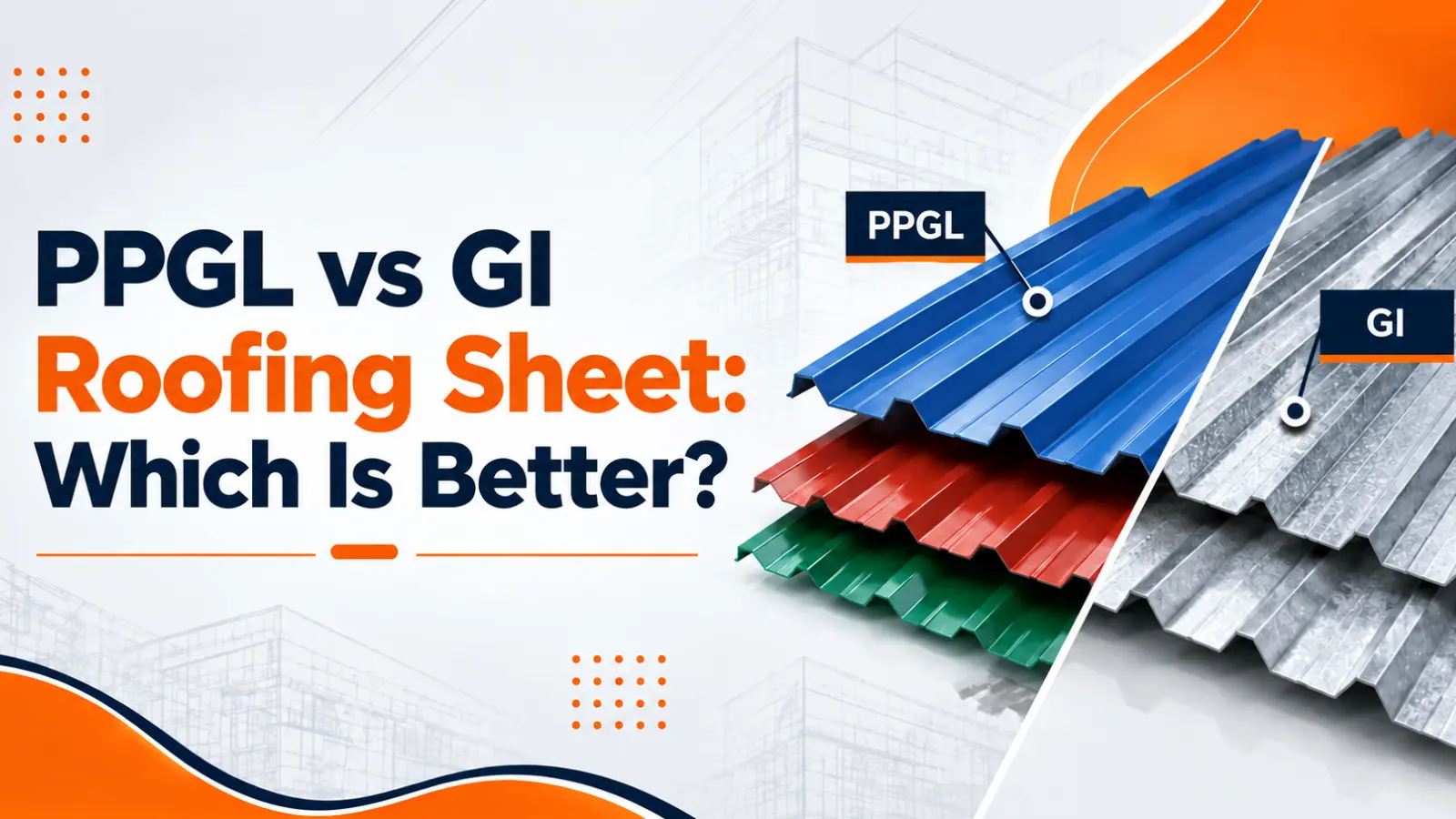
Selecting the right roofing material is one of the most important decisions when planning an industrial building. Whether it is a warehouse, factory, manufacturing unit, logistics centre, workshop, or commercial shed, the roof directly affects the building’s durability, maintenance costs, energy efficiency, and long-term performance.
Among the most popular options available today are PPGL (Pre-Painted Galvalume) and GI (Galvanised Iron) roofing sheets. While both are widely used in industrial construction, they differ in terms of corrosion resistance, heat reflectivity, lifespan, and overall value.
If you are comparing PPGL vs GI roofing sheets, this guide explains the differences in simple terms. By the end, you will know which roofing sheet is better suited for your industrial project.
What Are PPGL and GI Roofing Sheets?
Before comparing their performance, it is important to understand what each roofing sheet is made of.
PPGL Roofing Sheets
PPGL stands for Pre-Painted Galvalume. These roofing sheets are manufactured from steel coated with an aluminium-zinc alloy, then factory-applied paint.
The protective alloy typically consists of:
- 55% Aluminium
- 43.4% Zinc
- 1.6% Silicon
This combination provides excellent resistance against rust, corrosion, moisture, and harsh weather conditions. The painted finish also improves appearance while adding another protective layer.
PPGL roofing sheets are commonly used in:
- Industrial warehouses
- Manufacturing plants
- Food processing units
- Coastal buildings
- Commercial roofing projects
GI Roofing Sheets
GI stands for Galvanised Iron. These roofing sheets are manufactured by coating steel with a layer of pure zinc.
The zinc coating protects the steel underneath from rust and corrosion. Although GI sheets have been used for decades for their affordability and reliability, they are generally more suitable for environments with a lower corrosion risk.
GI roofing sheets are commonly used for:
- Small industrial buildings
- Workshops
- Agricultural structures
- Storage sheds
- Inland commercial buildings
PPGL vs GI Roofing Sheet: Key Differences
Although both materials are made using coated steel, their protective coatings create noticeable differences in performance.
Coating Composition
The biggest difference between PPGL and GI roofing sheets lies in their protective coatings.
GI sheets use a pure zinc coating over the steel surface.
PPGL sheets use an aluminium-zinc alloy coating, followed by a pre-painted finish.
The aluminium present in PPGL forms a dense protective barrier, while zinc offers sacrificial protection against corrosion. Together, these layers provide stronger long-term protection compared to traditional galvanised coatings.
As a result, PPGL roofing sheets are better equipped to handle demanding industrial environments.
Corrosion Resistance
Corrosion is one of the biggest reasons industrial roofs require replacement. Factories located near coastal regions, chemical industries, humid areas, or locations with heavy rainfall face faster roof deterioration due to moisture and airborne contaminants.
In this comparison between PPGL and GI roofing sheets, PPGL clearly performs better.
Its aluminium-rich coating slows down corrosion and helps resist:
- Salt-laden coastal air
- Industrial chemical fumes
- Acid rain
- High humidity
- Moisture exposure
GI sheets offer decent corrosion protection under normal weather conditions.
However, continuous exposure to aggressive environments can gradually weaken the zinc coating, increasing the chances of rust formation.
For industries operating in harsh environments, PPGL is generally the safer investment.
Heat Reflectivity and Thermal Performance
Industrial buildings often experience high indoor temperatures during summer. One advantage of PPGL roofing sheets is their higher heat reflectivity. The painted surface reflects more solar radiation, helping reduce heat absorption.
Benefits include:
- Cooler indoor temperatures
- Improved employee comfort
- Lower cooling costs
- Better energy efficiency
PPGL roofing sheets also have excellent thermal endurance and can withstand temperatures up to 315°C, making them suitable for industries where roofs are exposed to high heat.
GI roofing sheets absorb comparatively more heat, which can increase indoor temperatures in large industrial sheds.
If energy efficiency is a priority, PPGL offers a clear advantage.
Lifespan
Roof replacement involves significant labour, downtime, and material costs. One major reason industries prefer PPGL roofing sheets is their longer service life. Under normal industrial conditions:
- PPGL roofing sheets typically last between 15 and 25+ years.
- GI roofing sheets generally have a shorter service life, especially in corrosive industrial environments.
Actual lifespan depends on factors such as:
- Local climate
- Pollution levels
- Maintenance
- Roof slope
- Installation quality
Although both materials require periodic inspection, PPGL generally delivers better long-term durability.
Appearance
Modern industrial buildings increasingly prioritise aesthetics alongside performance. PPGL roofing sheets are available in various factory-finished colours that remain attractive for years. The painted finish also improves resistance against fading and weathering.
GI roofing sheets usually have a silver metallic appearance. While functional, they offer fewer design choices.
For commercial buildings where appearance matters, PPGL provides greater flexibility.
Cost Comparison
When comparing PPGL vs GI roofing sheet, cost is often the deciding factor. GI roofing sheets have a lower initial purchase price, making them suitable for projects with limited budgets.
However, lower upfront costs may lead to:
- Earlier maintenance
- More frequent repainting
- Faster replacement in aggressive environments
PPGL roofing sheets require a higher initial investment but often reduce lifetime maintenance costs due to their superior durability and corrosion resistance.
Looking only at the purchase price may favour GI, but considering the total ownership cost often makes PPGL the more economical choice in the long run.
Which Roofing Sheet Is Better for Different Industrial Applications?
The right roofing sheet depends on the environment in which your industrial building operates. Factors such as humidity, chemical exposure, temperature, maintenance requirements, and budget all play a role in determining whether PPGL or GI roofing sheets are the better choice.
Here’s a closer look at which material suits different industrial applications.
Manufacturing Plants
Manufacturing facilities often generate heat, dust, moisture, and chemical emissions that can affect the lifespan of roofing materials. In such demanding environments, PPGL roofing sheets are the preferred option because their aluminium-zinc coating offers superior corrosion resistance and excellent thermal performance.
They also require less maintenance, making them a cost-effective choice for factories that operate continuously.
Warehouses and Logistics Centres
Warehouses require roofing that can withstand changing weather conditions while protecting stored goods. If the warehouse is located in a humid or coastal region, PPGL roofing sheets provide better durability, improved heat reflectivity, and a longer lifespan.
For warehouses in dry inland areas with minimal exposure to moisture or pollutants, GI roofing sheets can be a practical and economical option.
Coastal Industrial Buildings
Industrial buildings near the coastline are constantly exposed to salt-laden air, a leading cause of roof corrosion. In these conditions, PPGL roofing sheets significantly outperform GI sheets. The aluminium-rich coating forms a protective barrier against salt and moisture, helping the roof maintain its strength and appearance for many years.
Chemical and Processing Industries
Chemical plants, pharmaceutical facilities, and processing units often release corrosive gases and fumes that can accelerate roof deterioration.
PPGL roofing sheets are better suited for these industries because they offer enhanced resistance to chemical corrosion and require fewer repairs over time. This makes them a reliable solution for industries operating in aggressive environments.
Food Processing Units
Food processing facilities require roofing materials that remain durable in high-humidity, high-traffic environments with frequent cleaning. Since moisture can shorten the lifespan of conventional roofing, PPGL roofing sheets are generally recommended. Their corrosion-resistant coating helps maintain structural integrity while reducing maintenance requirements.
Agricultural and Storage Sheds
Agricultural buildings such as grain storage units, poultry farms, and fertiliser warehouses are exposed to moisture, ammonia, and other corrosive substances. PPGL roofing sheets offer better long-term protection in these conditions. However, if the structure is located in a dry inland region and cost is the primary concern, GI roofing sheets can still provide satisfactory performance.
Small Industrial Workshops
For small workshops, fabrication units, or temporary industrial structures where the environment is relatively mild and the budget is limited, GI roofing sheets remain a popular choice.
They provide dependable protection at a lower initial cost and are suitable for projects where extreme corrosion resistance is not essential.
Heavy Engineering and Industrial Complexes
Large industrial complexes often require roofing that can withstand high temperatures, heavy machinery operations, and continuous exposure to challenging conditions.
In such cases, PPGL roofing sheets are the better investment due to their longer lifespan, superior heat reflectivity, and lower maintenance needs, helping reduce long-term operational costs.
When Should You Choose PPGL Roofing Sheets?
PPGL roofing sheets are the better option if your project involves:
- Coastal locations
- High humidity
- Heavy rainfall
- Chemical exposure
- Industrial pollution
- High operating temperatures
- Long-term investment planning
- Reduced maintenance requirements
When Should You Choose GI Roofing Sheets?
GI roofing sheets remain a practical choice under certain conditions. They are suitable when:
- Budget is the primary concern
- The project is located inland
- Weather conditions are relatively dry
- The building has low corrosion exposure
- Short-term industrial use is expected
Final Thoughts
The debate between PPGL and GI roofing sheets ultimately comes down to balancing budget with long-term performance.
If your industrial building operates in demanding environments with humidity, chemical exposure, coastal conditions, or high temperatures, PPGL roofing sheets are generally the better choice. Their aluminium-zinc coating offers superior corrosion resistance, improved heat reflectivity, reduced maintenance, and a service life of 15–25+ years.
On the other hand, GI roofing sheets remain a dependable and economical solution for inland industrial buildings where weather conditions are relatively mild, and budgets are tighter.
Rather than focusing only on the initial purchase cost, consider the roof’s entire lifecycle. A roofing solution that lasts longer, requires fewer repairs, and improves energy efficiency can deliver substantial savings over the years.
By assessing your location, operating environment, and long-term business goals, you can confidently choose the roofing sheet that best supports your industrial project.