

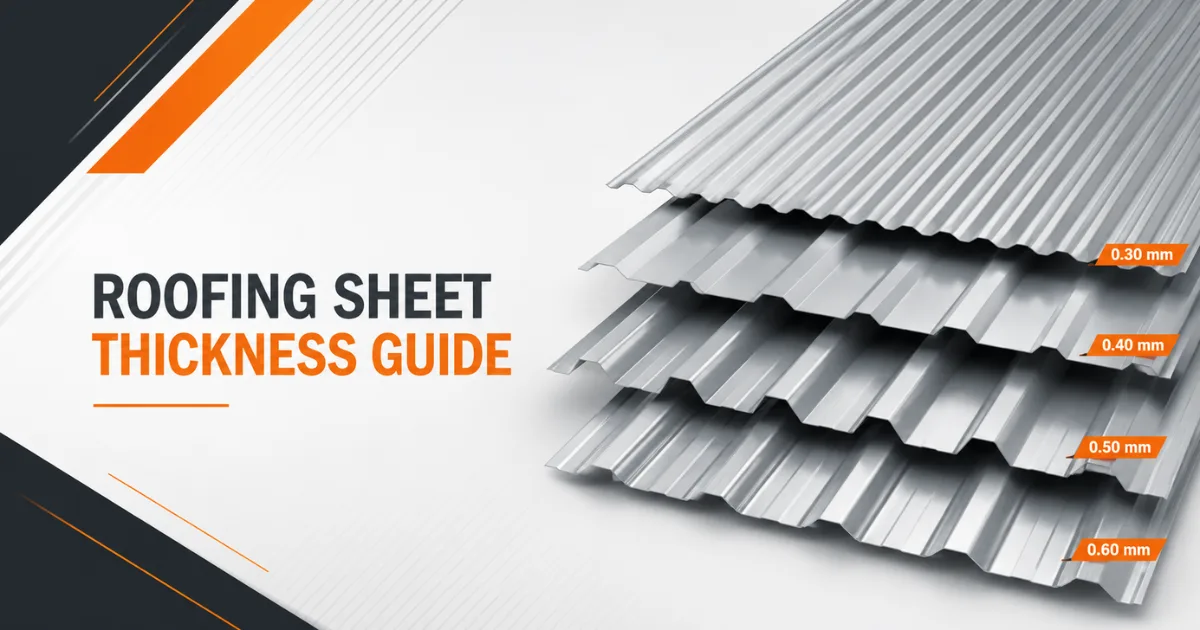
Choosing the right Roofing sheet thickness is one of the most important decisions when planning a shed, warehouse, workshop, or industrial building. While many people focus on colour, profile, or coating, thickness plays a much bigger role in the roof’s overall performance. It directly affects durability, strength, insulation, and long-term cost efficiency.
In India’s varied climate, from heavy monsoons and coastal humidity to extreme summer heat, selecting the appropriate roofing sheet gauge ensures structural safety and longevity.
This guide will help you understand roofing sheet thickness in detail and choose the right option for your specific requirements.
Understanding Roofing Sheet Thickness: Why It Matters for Your Shed
Roofing sheet thickness refers to the thickness of the metal sheet that forms the roof covering. It is usually measured in gauge numbers such as 26, 24, 22, and 20. A key point to remember is that a lower gauge number indicates a thicker, stronger sheet.
For sheds and industrial structures, roofing sheet thickness determines how well the roof performs under stress. A thin sheet may look similar to a thicker one from a distance, but its performance differs significantly under heavy rainfall, strong winds, or physical impact. Thicker sheets provide better rigidity and reduce the chances of bending or sagging over time.
When constructing a shed, several factors, such as span length, wind exposure, and usage type, should be considered. The roof is constantly exposed to environmental stress. Therefore, understanding roofing sheet thickness is essential to ensure long-term stability and protection.
Importance of Roofing Sheet Thickness
Durability
Durability is one of the primary reasons why roofing sheet thickness matters. Thicker sheets tend to last longer because they are more resistant to corrosion, warping, and mechanical damage. In regions with heavy rainfall or coastal humidity, thinner sheets may deteriorate faster if not properly maintained. Over time, exposure to moisture and temperature fluctuations can weaken lightweight sheets.
A thicker roofing sheet provides a stronger barrier against environmental wear and tear. It reduces the likelihood of cracks, leaks, and structural fatigue. For industrial sheds and agricultural structures expected to last for decades, choosing the right thickness significantly extends lifespan and reduces maintenance costs. Investing in better thickness today can prevent costly repairs in the future.
Strength
Strength is directly linked to roofing sheet thickness. Thicker sheets can handle greater loads without bending or flexing excessively. This is especially important for sheds that may support additional installations such as solar panels or water storage systems. Even routine maintenance work, such as walking on the roof, requires adequate structural support.
In areas prone to strong winds or storms, thin sheets may vibrate or lift more easily. Thicker roofing sheets offer better resistance against wind uplift and impact damage. They also maintain their shape over time, ensuring that the roof remains stable and secure.
For warehouses and factories with wide roof spans, higher strength is not just beneficial but necessary for safety.
Insulation
While roofing sheet thickness alone does not replace proper insulation systems, it does contribute to overall thermal and acoustic performance. Thicker sheets tend to reduce noise during heavy rainfall, which is particularly useful in industrial settings where sound levels are already high. They also offer slightly better thermal resistance than thinner sheets.
In hot Indian climates, heat absorption is a major concern. A thicker metal sheet combined with reflective coatings or insulation panels helps reduce indoor temperature fluctuations. This improves working conditions and lowers cooling costs.
For sheds used to store temperature-sensitive goods, selecting an appropriate roofing sheet thickness supports better internal climate control.
Top Considerations That Affect Your Roofing Sheet Thickness Selection
Selecting roofing sheet thickness should be based on practical considerations rather than just cost. Each project has unique requirements, and understanding these factors helps in making an informed decision.
Climate Considerations
Climate plays a major role in determining the ideal roofing sheet thickness. In regions with heavy monsoon rainfall, thicker sheets offer better resistance against continuous water exposure. They are less likely to deform when in prolonged contact with moisture. In cyclone-prone coastal states, wind pressure can be intense, and thicker gauges provide improved stability and resistance to uplift forces.
In extremely hot regions, roofing sheets expand due to high temperatures. Thicker sheets generally manage thermal expansion better and maintain structural stability. For moderate climates with low wind and rainfall intensity, thinner sheets may be sufficient.
Evaluating your local weather patterns ensures that the selected roofing sheet thickness performs effectively throughout the year.
Structural Load Requirements
The shed’s structural design significantly influences the required roofing sheet thickness. If the building has large spans between supports, the sheets must be strong enough to avoid sagging. Thicker sheets offer better load-bearing capacity and maintain alignment over long periods.
For industrial buildings where machinery vibrations are common, stronger roofing sheets reduce movement and noise. If rooftop equipment or solar panels are planned, the sheet thickness must be adequate to support the additional weight.
Consulting with a structural engineer helps determine whether a standard- or heavy-duty-gauge is required for safe performance.
Longevity and Durability Goals
Another important consideration is how long the structure is expected to last. For temporary sheds or short-term projects, thinner sheets may provide a cost-effective solution. However, for permanent warehouses or production facilities, durability should be prioritised.
Thicker roofing sheets typically have a longer service life and require fewer repairs. They maintain their structural integrity even after years of exposure to harsh conditions. When planning for long-term use, investing in higher roofing sheet thickness ensures reliability and peace of mind.
Over time, the savings in maintenance and replacement costs often justify the initial investment.
Roofing Sheet Thickness Ranges Explained: Which is Right for You?
Understanding common gauge options helps you match roofing sheet thickness with your project needs.
26 Gauge
26-gauge roofing sheets are relatively thin and lightweight. They are commonly used for small sheds, temporary structures, or projects where budget is the primary concern. These sheets are easier to handle and install due to their lighter weight. However, they offer lower strength and may not be suitable for high-wind or heavy-load conditions. For mild climates and low-risk applications, 26-gauge can be a practical option.
24 Gauge
24-gauge roofing sheets provide a balanced combination of strength and affordability. They are widely used in residential sheds, agricultural buildings, and light commercial structures. Compared to 26 gauge, they offer better durability and improved resistance to bending. For many medium-scale projects, 24-gauge roofing sheet thickness delivers reliable performance without a significant increase in cost.
22 Gauge
22-gauge sheets are thicker and more robust, making them suitable for industrial sheds and warehouses. They provide high structural strength and better impact resistance. In areas with strong winds or heavy rainfall, 22-gauge sheets offer improved protection and stability. For projects where long-term durability is a priority, this thickness is often recommended.
20 Gauge
20-gauge roofing sheets are heavy-duty and designed for demanding environments. They are typically used in large industrial facilities and buildings exposed to extreme weather conditions. These sheets offer maximum strength, excellent wind resistance, and extended lifespan. Although they are more expensive, their superior performance makes them ideal for critical structures that require high reliability.
Conclusion
Choosing the correct Roofing sheet thickness is essential for ensuring safety, durability, and long-term value. From climate conditions and structural load requirements to durability expectations, several factors must be carefully evaluated before making a decision.
Thinner gauges may suit small or temporary sheds, while thicker sheets provide enhanced strength and longevity for industrial and commercial applications.
By understanding roofing sheet thickness ranges and their practical implications, you can select a solution that meets your project’s needs and performs reliably for years to come.