

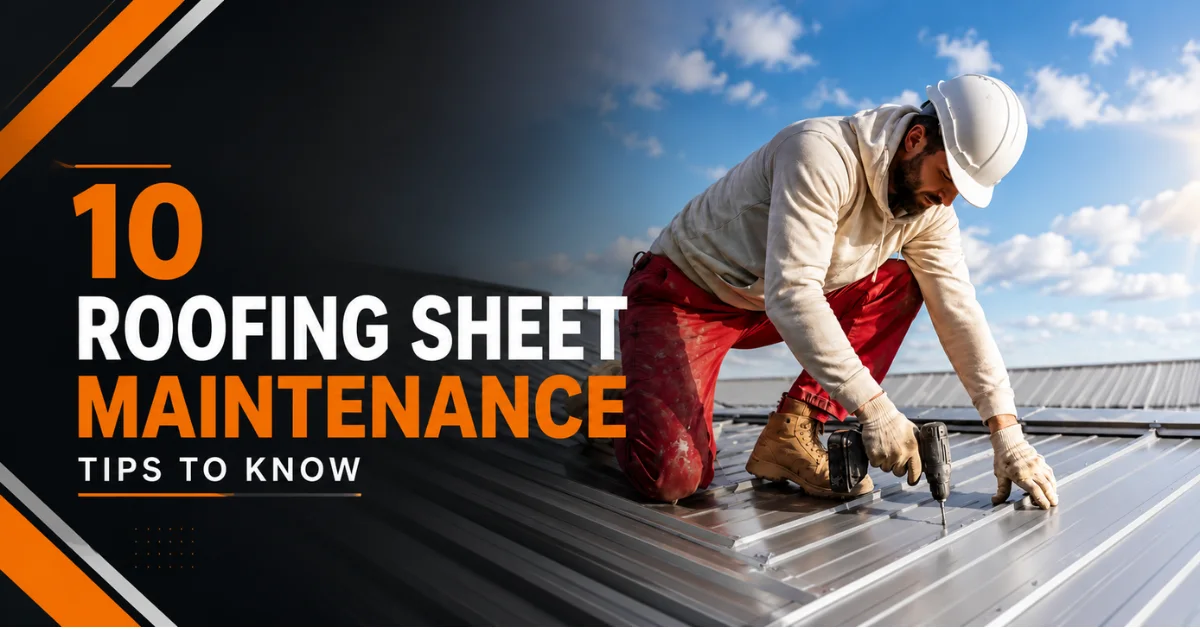
Roofing sheets play a crucial role in protecting industrial, commercial, and residential buildings from harsh weather, heat, rain, and dust. However, even the best roofing system will not perform well without proper care.
Regular roofing sheet maintenance helps increase the life of the sheets, keeps the structure safe, and prevents costly repairs. Whether you are using colour-coated sheets, corrugated sheets, decking sheets, or PUF panels, following the right maintenance practices ensures long-term performance.
Many building owners install high-quality roofing sheets but ignore maintenance until problems appear. Small issues like loose fasteners, dust accumulation, or minor scratches can slowly damage the roof if not addressed on time. With proper roofing sheet maintenance, you can protect the coating, prevent rust, maintain insulation performance, and keep the roof looking new for years.
Below are 10 important roofing sheet maintenance tips every building owner, contractor, and facility manager should know.
Inspect Roofing Sheets Regularly
Regular inspection is the first step in proper roofing sheet maintenance. Roof sheets are exposed to sun, rain, wind, and pollution every day, so checking them periodically helps detect problems early.
Inspect the roof at least twice a year and also after heavy rain, storms, or strong winds. Look for signs such as loose screws, damaged sheets, scratches, bending, or rust marks. Early inspection prevents small issues from turning into expensive repairs.
For industrial roofing sheets and long-span sheets, regular inspection is even more important because these roofs cover large areas. A small leak in one section can affect the entire structure.
Routine inspection keeps the roofing system strong and increases the life of the sheets.
Keep the Roof Surface Clean
Dust, leaves, bird droppings, and industrial pollution can collect on roofing sheets over time. If not cleaned regularly, these deposits can damage the protective coating and cause corrosion.
Cleaning is an essential part of roofing sheet maintenance. Use clean water and a soft brush to remove dirt. Avoid using harsh chemicals or sharp tools, as they may damage the colour coating or galvanised layer.
In industrial areas, cleaning should be done more frequently because chemical particles in the air can settle on the roof surface. Proper cleaning helps maintain the shine, colour, and durability of the roofing sheets.
A clean roof also improves water flow during rain and prevents water from getting trapped between laps.
Check Fasteners and Fixings
Fasteners play a very important role in holding roofing sheets firmly to the purlin structure. Over time, screws and bolts may loosen due to vibration, wind pressure, or thermal expansion.
During roofing sheet maintenance, always check the condition of fasteners, washers, and seals. Loose screws can cause water leakage and sheet movement, which may damage the roof.
Use proper self-drilling screws with EPDM washers for better sealing. If any fastener is rusted or damaged, replace it immediately.
Tight and properly sealed fasteners ensure that roofing sheets remain secure even in heavy rain and strong winds.
Prevent Water Accumulation on the Roof
Water accumulation is one of the most common reasons for roofing damage. When water stays on the roof for a long time, it can cause corrosion, leakage, and weakening of the sheet.
Proper roofing sheet maintenance includes checking the roof slope and drainage system. Make sure rainwater flows smoothly towards gutters and downpipes.
Blocked gutters, improper laps, or bent sheets can stop water from draining. Clean the drainage system regularly and ensure that end laps and side laps are properly sealed.
Good drainage increases the life of colour-coated roofing sheets and prevents rust formation.
Protect the Colour Coating
Modern roofing sheets come with colour coating or protective paint layers to resist corrosion and improve appearance. This coating must be protected during maintenance.
While performing roofing sheet maintenance, avoid dragging heavy tools on the roof surface. Scratches on the coating can expose the metal to moisture and cause rust.
If any scratch or minor damage appears, touch-up paint should be applied immediately to prevent corrosion. Using high-quality coated sheets reduces maintenance, but proper care is still required.
Maintaining the coating keeps the roof looking new and improves long-term durability.
Ensure Proper Side Laps and End Laps
Incorrect side laps and end laps can cause water leakage, especially during heavy rain. Over time, sealants may wear out, allowing water to enter between sheets.
During roofing sheet maintenance, check whether the laps are tight and properly aligned. If sealant is damaged, reapply suitable sealant to prevent leakage.
For long roofing sheets and industrial roofing systems, proper lap maintenance is very important because even a small gap can allow water to enter the building.
Correct lap sealing keeps the structure safe and prevents interior damage.
Avoid Walking Directly on Roofing Sheets
One common mistake during maintenance is walking directly on roofing sheets without proper support. It can bend the sheets, damage the coating, and loosen fasteners.
While doing roofing sheet maintenance, always walk on the purlin line or use walking boards. This distributes weight evenly and prevents denting.
Thin sheets, long span sheets, and decking sheets require extra care. Improper walking may reduce the strength of the roof and create leakage points.
Safe handling during maintenance protects both the roof and the workers.
Check Ridge Caps, Flashings, and Protrusions
Roof areas like ridge caps, flashings, ventilators, skylights, and pipe openings need special attention. These are the most common places where leakage can occur.
During roofing sheet maintenance, check whether ridge caps are properly fixed and sealed. Flashings around walls, chimneys, or vents should be tight and rust-free.
If the sealant around protrusions becomes weak, water may enter the roof structure. Replace damaged sealant immediately to avoid future problems.
Proper care of these small components ensures complete roof protection.
Maintain the Purlin and Supporting Structure
Roofing sheets are fixed on a purlin framework, so the condition of the supporting structure is very important. If the purlin becomes weak, the roofing sheet alignment may change.
As part of roofing sheet maintenance, check whether the purlin structure is rusted, bent, or loose. Steel purlins should be properly coated to prevent corrosion.
If the framework is strong, the roofing sheets will stay in position and perform well for many years. Ignoring the supporting structure can lead to serious roofing problems.
A strong base always ensures better roofing performance.
Follow Safe Maintenance Practices
Safety should always be the top priority during roofing work. Maintenance should be done carefully using proper equipment and trained workers.
While performing roofing sheet maintenance, use safety belts, proper ladders, and non-slip shoes. Avoid working during rain, strong winds, or extreme heat.
Industrial roofing sheets are often installed at great heights, so safety rules must be followed strictly. Safe maintenance not only protects workers but also prevents accidental damage to the roof.
Proper planning, correct tools, and safe methods make maintenance easy and effective.
Conclusion
Regular roofing sheet maintenance is essential for keeping your roof strong, durable, and leak-free for many years. Simple steps like cleaning, inspection, checking fasteners, protecting the coating, and maintaining proper drainage can greatly increase the life of roofing sheets.
High-quality roofing sheets are designed for long-term performance, but they still require proper care to give the best results. By following these maintenance tips, building owners can avoid costly repairs, improve safety, and keep their roofing system in excellent condition.
A well-maintained roof not only protects the building but also improves its appearance and overall value. Regular maintenance is always better than major repairs.