

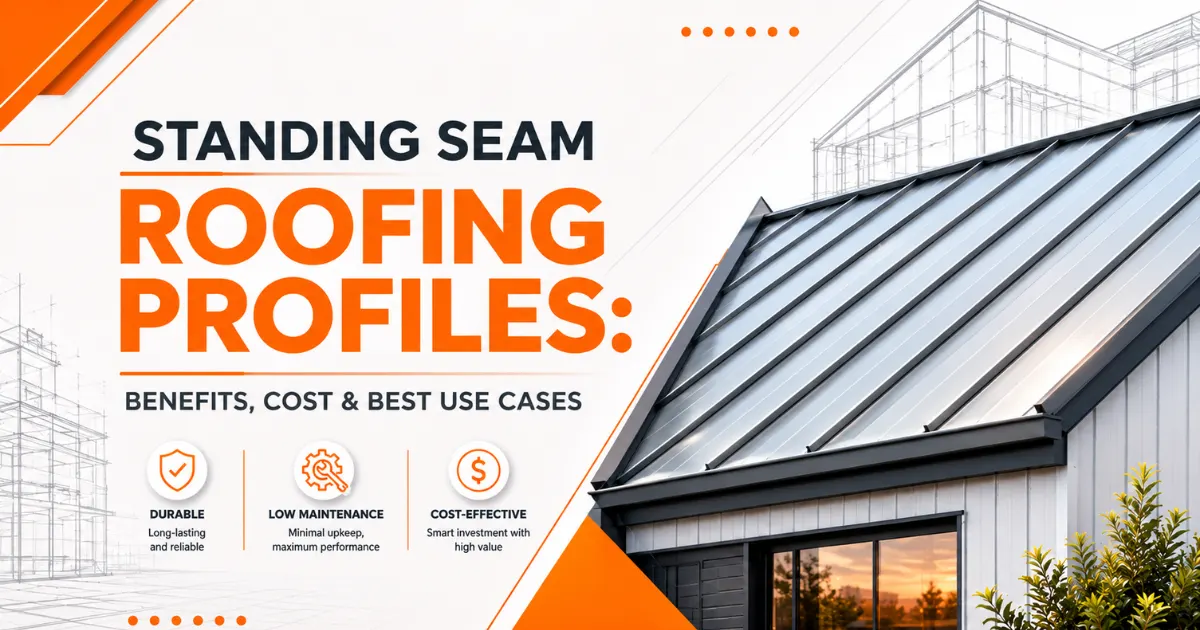
Roofing plays a major role in the safety, durability, and appearance of any building. Over the last few years, standing seam roofing systems have become a preferred choice for industrial, commercial, and modern residential projects across India. Their sleek finish, strong weather resistance, and long service life make them ideal for both practical and aesthetic needs.
Unlike conventional roofing sheets that use exposed screws, standing seam roofing systems feature concealed fasteners and raised seams, improving performance and reducing maintenance. They are designed to handle harsh weather conditions, thermal expansion, and long-term wear without compromising on appearance.
In this blog, we will explore what standing seam roofing systems are, their types, advantages, pricing in India, and the best applications for these advanced roofing solutions.
What Is a Standing Seam Roofing System?
A standing seam roofing system is a modern metal roofing solution made with continuous panels joined together through raised seams. These seams stand above the roof surface and lock the panels tightly, preventing water leakage and improving durability. The fasteners remain hidden beneath the panels, which protects them from direct exposure to rain, heat, and dust.
Standing seam roofing systems are commonly manufactured using materials such as galvanised steel, aluminium, zinc, or colour-coated metal sheets. The clean vertical lines of the panels create a sophisticated architectural appearance while offering excellent structural performance.
These roofing systems are widely used in factories, warehouses, airports, commercial complexes, institutional buildings, and premium homes. Their ability to withstand heavy rainfall, strong winds, and temperature fluctuations makes them highly suitable for Indian weather conditions.
Types of Standing Seam Roofing System
Different projects require different roofing profiles depending on slope, climate, structural movement, and design preferences. Understanding the major types of standing seam roofing systems helps in selecting the right solution for a building.
Mechanical Seam
Mechanical seam roofing panels are locked together using specialised seaming machines. The seams are folded and mechanically crimped, creating an extremely tight and secure joint. This type of roofing is highly reliable in areas that experience heavy rainfall, strong winds, or snow.
Mechanical seam profiles are often preferred for large industrial and commercial projects because they provide excellent weatherproofing and structural strength. They are also suitable for low-slope roofs where water drainage is a major concern.
Snap Lock
Snap-lock standing seam profiles are designed for faster, easier installation. The panels simply snap together without requiring mechanical seaming equipment. It reduces installation time while maintaining a clean, modern finish.
These roofing systems are commonly used in residential projects and light commercial structures. Snap-lock panels work best on roofs with steeper slopes and offer a balance of aesthetics, durability, and affordability.
Nail / Fastener Flange
Nail flange systems feature panels attached directly to the roof deck with concealed fasteners. They are lightweight, easy to install, and suitable for projects where thermal movement is less significant.
Although this option is more economical than other standing seam roofing systems, it is generally recommended for smaller buildings or mild climates. It still provides a neat appearance and better protection than conventional exposed-fastener roofing sheets.
The Pros of Standing Seam Roofing System
The growing popularity of standing seam roofing systems is largely due to the long list of performance and design benefits they offer. From durability to sustainability, these roofing profiles deliver long-term value.
Longevity Due to Concealed Fasteners
One of the biggest advantages of standing seam roofing systems is their concealed-fastening design. Since the screws and clips remain hidden beneath the panels, they are protected from rainwater, sunlight, and corrosion. It significantly reduces the chances of leakage and fastener failure.
Traditional roofing sheets often develop leaks around exposed screws over time. In contrast, standing seam systems maintain their performance for decades with minimal maintenance, making them a long-lasting roofing investment.
Quality and Warranties
High-quality standing seam roofing systems are manufactured using advanced roll-forming technology and premium metal substrates. Many reputed manufacturers also provide strong warranties for paint finish, corrosion resistance, and overall product performance.
Because of their durability and engineering precision, these roofing systems are trusted for large industrial and commercial projects where reliability is essential. Investing in quality roofing reduces future repair and replacement costs.
Allows Thermal Movement
Metal roofs naturally expand and contract due to temperature changes. Standing seam roofing systems are specifically designed to accommodate this thermal movement without damaging the panels or fasteners.
The concealed clip systems allow the panels to move slightly as temperatures fluctuate. This prevents issues such as oil canning, panel distortion, or screw loosening, which are common in conventional metal roofs exposed to extreme heat.
Sophisticated Look
Standing seam roofs are known for their sleek and modern appearance. The clean vertical seams create a premium architectural finish that enhances the visual appeal of residential and commercial buildings alike.
Architects and designers often prefer these systems for modern structures because they combine functionality with aesthetics. Whether used in luxury homes or contemporary office buildings, standing seam profiles add a refined and professional look.
Environmentally Friendly
Modern standing seam roofing systems are considered environmentally responsible roofing solutions. Most metal roofing materials are recyclable and can be reused at the end of their service life, reducing construction waste.
These roofs also support energy efficiency by reflecting solar heat and improving thermal performance. In hot Indian climates, reflective metal roofs can help reduce indoor temperatures and lower cooling costs.
What’s the Cost of a Standing Seam Roofing System in India?
The cost of standing seam roofing systems in India depends on several factors, including the metal type, panel thickness, coating quality, roof design, and installation requirements. On average, the material cost ranges from ₹550 to ₹1,200+ per square metre, or approximately ₹50–₹120+ per square foot.
Premium options such as thick aluminium panels, zinc roofing, or specialised structural standing-seam systems can cost between ₹1,000 and ₹3,250 per square metre, or even higher. Installation charges may also vary depending on roof complexity, project location, insulation requirements, and labour expertise.
Although the initial investment is higher than that of conventional roofing sheets, standing seam roofing systems offer excellent long-term value. Their durability, low maintenance needs, energy efficiency, and extended lifespan help reduce overall lifecycle costs. For industrial and commercial projects, this often results in significant savings over time.
Businesses also prefer these systems because they minimise operational disruptions caused by frequent roof repairs or leakages. When evaluated over decades of use, standing seam roofing proves to be a cost-effective roofing solution.
What are the best use cases of the Standing Seam Roofing System?
Standing seam roofing systems are versatile and suitable for a wide range of applications. Their structural strength, weather resistance, and modern design make them ideal for both residential and commercial environments.
Low-Slope Residential and Commercial Roofs
These roofing systems perform exceptionally well on low-slope roofs because the raised seams prevent water penetration and improve drainage. It makes them ideal for warehouses, factories, shopping centres, and modern homes with flat or gently sloping roof designs.
The watertight construction helps protect buildings from heavy rainfall and moisture damage, especially in regions with monsoon climates.
Modern Residential Design
Modern homes often feature clean architectural lines and minimalist aesthetics. Standing seam roofing systems perfectly complement such designs with their sleek and elegant appearance.
Homeowners also appreciate the durability and low maintenance requirements of these roofs. They offer a premium finish while ensuring long-term structural protection.
Coastal Regions
Buildings located in coastal areas face high humidity, salt exposure, and strong winds. Standing seam roofing systems made from aluminium or corrosion-resistant coated steel are highly suitable for these challenging environments.
Their concealed-fastener design reduces the risk of rust around screw holes, improving the roof’s resistance to corrosion and extending its lifespan.
High-Wind Areas
In regions prone to storms or high winds, roofing systems must provide excellent uplift resistance. Standing seam profiles are engineered to remain secure under harsh weather conditions, making them a reliable option for exposed locations.
Their interlocking seams and concealed clips improve structural stability and minimise the chances of roof damage during extreme weather events.
Solar Panel Integration
Standing seam roofing systems are well-suited for solar panel installations. Special clamps can be attached directly to the raised seams without drilling holes into the roof surface.
This simplifies solar panel mounting while preserving the roof’s waterproofing performance. As solar adoption continues to grow in India, many commercial and industrial facilities are choosing standing-seam roofs for easier integration with renewable energy.
Conclusion
Standing seam roofing systems have become one of the most dependable and visually appealing roofing solutions for modern construction projects. Their concealed fasteners, excellent weather resistance, sleek design, and long lifespan make them suitable for industrial, commercial, and residential applications alike.
Whether you are planning a factory, warehouse, commercial building, or premium home, these roofing systems provide strong long-term value through durability and low maintenance.
While the initial investment may be higher than traditional roofing sheets, the performance benefits and lifecycle savings make them a smart roofing choice.
As Indian construction continues to move towards energy-efficient, sustainable building solutions, standing seam roofing systems are expected to remain a preferred option for architects, builders, and property owners seeking reliability with modern aesthetics.