

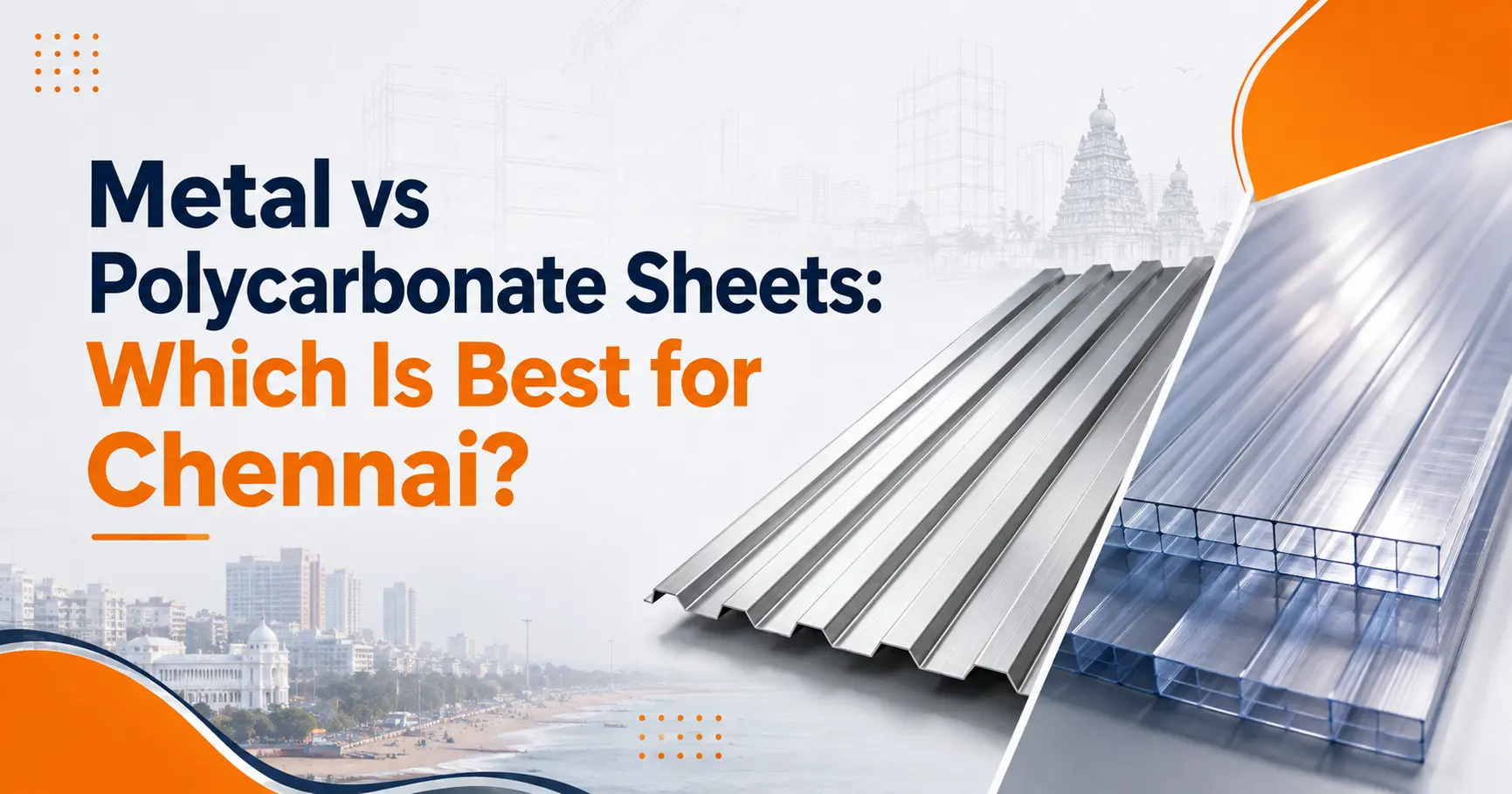
Choosing the right roofing material is important for any residential, commercial, or industrial property. In a city like Chennai, where buildings face intense sunlight, heavy rainfall, coastal humidity, and occasional cyclones, the roofing material must offer durability, weather resistance, and long-term value.
Many property owners find themselves comparing metal vs polycarbonate sheets when planning a new roofing project. Both materials have unique advantages and limitations. While metal roofing is known for its strength and longevity, polycarbonate sheets are valued for their transparency and lightweight design.
This guide explores the key differences between metal vs polycarbonate sheets, helping Chennai property owners make an informed decision based on their specific needs.
Understanding Metal Roofing
Metal roofing has become a popular choice across Chennai for residential, industrial, commercial, and warehouse applications. These roofing sheets are commonly manufactured using galvanised steel, aluminium, or colour-coated metal and are designed to withstand harsh weather conditions.
Metal roofs are available in different profiles, thicknesses, and finishes. They provide excellent protection against heat, rain, and strong winds, making them suitable for Chennai’s challenging climate. Their robust construction and long service life have made them a preferred roofing solution for many building owners.
4 Advantages of Metal Roofing
Exceptional Durability
One of the biggest advantages of metal roofing is its durability. High-quality metal sheets can withstand heavy rain, intense sunlight, and strong coastal winds without significant damage. This makes them ideal for Chennai’s weather conditions.
Long Service Life
Metal roofs are built to last for decades when installed and maintained properly. Many modern roofing systems can provide reliable performance for 30 to 50 years, making them a cost-effective long-term investment.
Better Weather Resistance
Chennai experiences both scorching summers and heavy monsoon rains. Metal roofing performs exceptionally well under these conditions. It resists water penetration, wind damage, and corrosion when coated with protective finishes.
Low Maintenance Requirements
Compared to many other roofing materials, metal roofing requires minimal maintenance. Regular cleaning and occasional inspections are usually enough to keep the roof in excellent condition for years.
4 Disadvantages of Metal Roofing
Higher Initial Investment
Metal roofing often comes with a higher upfront cost than some alternative roofing materials. However, the long lifespan and reduced maintenance costs can offset the initial investment over time.
Noise During Heavy Rainfall
One common concern with metal roofing is noise. During heavy rainstorms, the sound of raindrops hitting the roof can be noticeable, especially if proper insulation is not installed.
Heat Absorption
Metal surfaces can absorb significant heat during Chennai’s hot summers. Without insulation or reflective coatings, indoor spaces may become warmer, increasing cooling requirements.
Potential for Dents
Although metal roofing is strong, certain types of metal sheets may develop dents when subjected to severe impact from falling objects or debris during storms.
Understanding Polycarbonate Roofing
Polycarbonate roofing is a lightweight roofing solution made from high-performance thermoplastic material. It is commonly used for skylights, pergolas, patios, walkways, greenhouses, car parking sheds, and commercial spaces that require natural daylight.
Polycarbonate sheets are available in clear, tinted, and multi-wall designs. Their ability to allow light transmission while providing protection from the elements makes them a popular choice for specific applications.
When comparing metal vs polycarbonate sheets, polycarbonate roofing stands out for its transparency and aesthetic appeal.
4 Advantages of Polycarbonate Roofing
Excellent Light Transmission
One of the biggest benefits of polycarbonate roofing is its ability to allow natural sunlight into a space. This reduces dependence on artificial lighting during the day and creates brighter interiors.
Lightweight Construction
Polycarbonate sheets are significantly lighter than metal roofing materials. Their lightweight nature makes transportation, handling, and installation easier and often reduces structural load requirements.
Attractive Appearance
Modern polycarbonate roofing systems provide a clean and contemporary look. They are available in various colours and finishes that can enhance the visual appeal of outdoor spaces.
Good Impact Resistance
Despite being lightweight, polycarbonate sheets are highly impact-resistant. They can withstand moderate impacts without cracking, making them suitable for various outdoor applications.
4 Disadvantages of Polycarbonate Roofing
Limited Lifespan
Although durable, polycarbonate sheets generally have a shorter lifespan than metal roofing. Prolonged exposure to Chennai’s intense sunlight can eventually affect their appearance and performance.
Susceptibility to Scratches
Polycarbonate surfaces can scratch more easily than metal roofing materials. Over time, scratches may reduce transparency and affect the overall appearance.
Expansion and Contraction
Temperature fluctuations can cause polycarbonate sheets to expand and contract. Improper installation may lead to warping or stress on fasteners and joints.
Lower Structural Strength
Polycarbonate roofing is not designed for heavy-duty industrial applications. For structures that require maximum strength and load-bearing capacity, metal roofing often performs better.
Metal Vs Polycarbonate Roofing: Key Differences
- Durability and Strength: Metal roofing offers superior strength and long-term durability, making it suitable for heavy-duty applications. Polycarbonate sheets, while impact-resistant, are better suited for lighter structures and aesthetic uses.
- Light Transmission and Aesthetics: Polycarbonate roofing allows natural light to pass through, creating bright and visually appealing spaces. Metal roofing, on the other hand, is opaque and focuses more on protection than aesthetics.
- Thermal Performance and Comfort: Metal roofs may require insulation to manage indoor temperatures effectively. Polycarbonate sheets can allow heat and light to enter, which may increase indoor warmth depending on the design.
- Maintenance and Longevity: Metal roofing generally requires less maintenance and lasts longer over time. Polycarbonate sheets may need regular cleaning and have a comparatively shorter lifespan.
- Cost and Value Over Time: Polycarbonate sheets may have a lower initial cost, but metal roofing often provides better long-term value due to its durability and reduced maintenance needs.
Metal vs Polycarbonate Sheets: Which Is Best for Chennai?
- Climate Suitability: Chennai’s climate includes intense heat, heavy rainfall, and coastal humidity. Metal roofing performs exceptionally well under these conditions, offering strong resistance to weather-related damage.
- Application-Based Choice: For industrial buildings, warehouses, and residential roofs, metal roofing is the more reliable option. Polycarbonate sheets are better suited for skylights, patios, and areas requiring natural light.
- Durability and Maintenance Needs: Metal roofing requires minimal maintenance and offers long-term durability, making it ideal for Chennai’s demanding environment. Polycarbonate sheets may need more upkeep over time.
- Combination Approach: In many cases, combining both materials works best. Metal roofing can be used for primary coverage, while polycarbonate sheets can be added as skylights to enhance natural lighting.
- Overall Recommendation: When comparing metal vs polycarbonate sheets, metal roofing is generally the better choice for Chennai due to its strength, longevity, and ability to withstand harsh weather conditions.
Conclusion
The debate around metal vs polycarbonate sheets is common among property owners planning new roofing installations. Both materials offer distinct advantages, but their suitability depends on the specific application.
Metal roofing stands out for its durability, weather resistance, longevity, and low maintenance requirements. It is particularly well-suited for Chennai’s climate, where roofs must endure heat, humidity, rainfall, and strong winds.
Polycarbonate roofing excels in applications that require natural light and modern aesthetics. It is lightweight, visually appealing, and ideal for outdoor structures and skylight installations.
When considering metal vs polycarbonate sheets, building owners should evaluate their functional requirements, maintenance expectations, and long-term goals. For most residential, commercial, and industrial roofing projects in Chennai, metal roofing remains the preferred choice due to its superior performance and reliability.
By understanding the strengths and limitations of both materials, property owners can make a confident roofing decision that delivers lasting value and protection.