

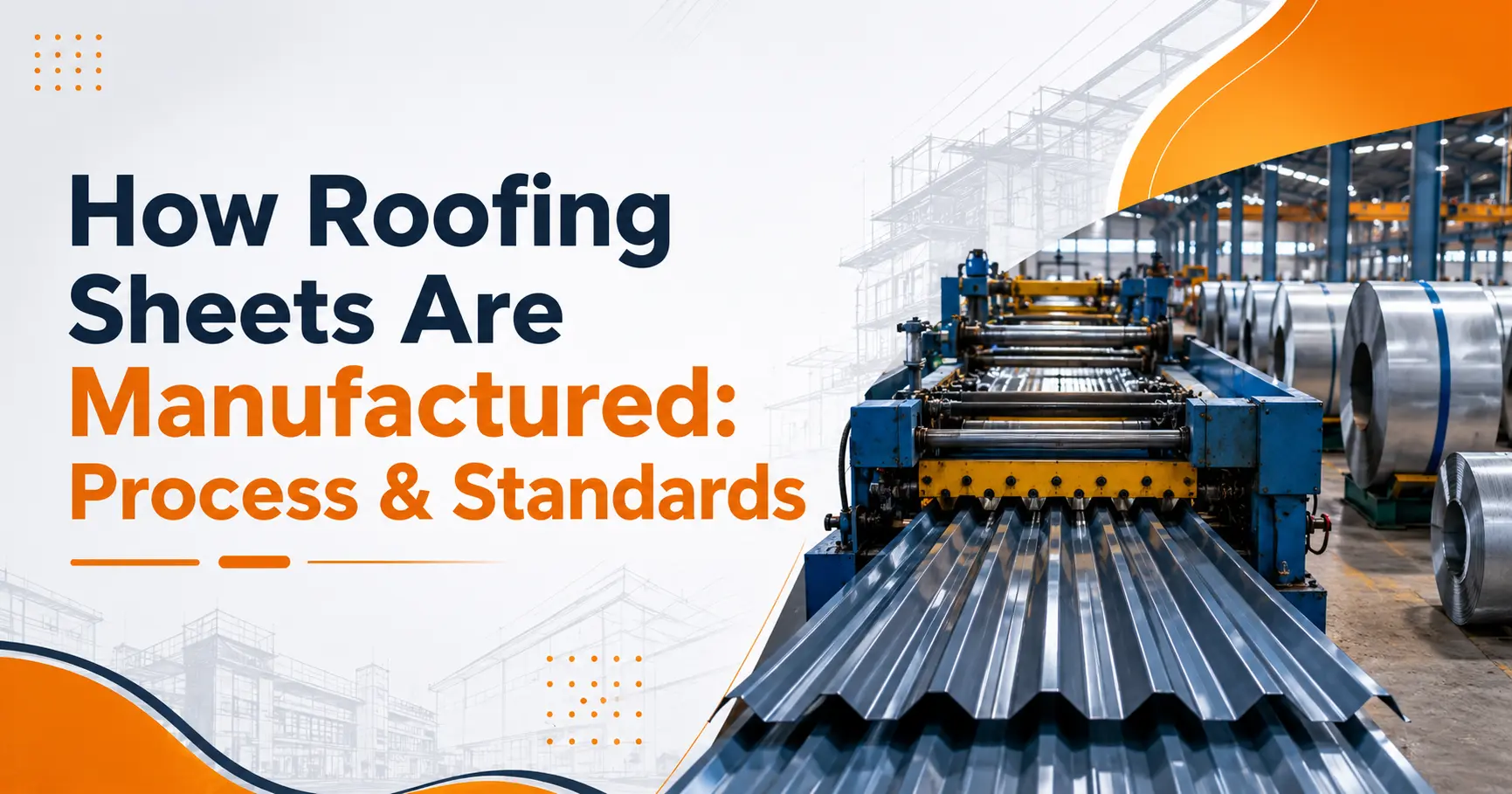
Roofing sheets play a vital role in modern construction. They protect buildings from harsh weather, improve energy efficiency, and add strength to residential, commercial, and industrial structures. Whether used in warehouses, factories, commercial complexes, agricultural buildings, or homes, the quality of roofing sheets directly impacts the durability and performance of a structure.
Many people choose roofing sheets based on appearance, thickness, or price. However, very few understand the detailed manufacturing process behind them. From selecting premium raw materials to applying protective coatings and conducting quality inspections, every stage influences the final product’s strength and lifespan.
In this blog, we will explore how roofing sheets are manufactured, the standards followed during production, and why quality control is essential for long-lasting roofing solutions.
Raw Material Preparation
The manufacturing journey of roofing sheets begins with careful raw material selection. The quality of the base metal determines the sheet’s durability, corrosion resistance, and structural performance.
Selecting the Base Metal
Manufacturers typically use steel, galvanised steel, aluminium, or galvalume coils as the primary raw material. These metals are chosen for their strength, flexibility, and ability to withstand environmental conditions.
Galvalume steel is particularly popular because it combines the benefits of aluminium and zinc. This combination offers superior corrosion resistance and longer service life compared to conventional steel.
The raw materials usually arrive in large coils weighing several tonnes. Before production begins, these coils undergo detailed inspections to ensure they meet industry specifications for thickness, composition, and surface quality.
Cleaning and Surface Preparation
Before the metal enters the production line, it must be thoroughly cleaned. During transportation and storage, coils can accumulate dust, grease, oil, and other contaminants.
Manufacturers use chemical cleaning solutions and specialised washing systems to remove these impurities. The cleaned metal is then rinsed and dried to create a smooth surface for coating application.
This stage is critical because even minor contaminants can affect coating adhesion and reduce the overall performance of the finished roofing sheets.
Material Inspection Before Processing
Quality checks begin long before the shaping process. Manufacturers examine the metal for surface defects, scratches, dents, and inconsistencies.
Advanced measuring equipment verifies thickness and dimensional accuracy. Any material that fails to meet required standards is removed from the production line.
This proactive approach helps ensure consistent quality throughout the manufacturing process and reduces the risk of defects in the final product.
Galvanization & Coating
Once the base metal is cleaned and prepared, it moves to one of the most important stages of production: corrosion protection and surface coating.
Corrosion Protection Through Galvanisation
Steel naturally corrodes when exposed to moisture and oxygen. To prevent rust formation, manufacturers apply a protective zinc or aluminium-zinc coating through a process known as galvanisation.
In hot-dip galvanisation, steel passes through a bath of molten zinc. The zinc forms a protective layer that shields the metal from environmental damage.
For premium applications, galvalume coatings are often used. These coatings contain aluminium, zinc, and silicon, providing enhanced resistance against corrosion and heat.
This protective layer significantly increases the lifespan of roofing sheets, especially in coastal and industrial regions where corrosion risks are higher.
Primer Application
After galvanisation, a primer coating is applied to the metal surface. The primer improves adhesion between the protective metal coating and the final paint layer.
It also acts as an additional barrier against moisture, chemicals, and UV exposure. A high-quality primer contributes to better coating durability and long-term performance.
The primer is evenly distributed across the surface using precision coating equipment to ensure uniform coverage.
Colour Coating Process
Modern roofing sheets are available in a wide range of colours and finishes. These colours are applied using advanced coil coating technology.
Manufacturers use specialised paints such as polyester, modified polyester, PVDF, or SMP coatings. These coatings enhance appearance while protecting the metal from fading, peeling, and weather damage.
The coated metal passes through curing ovens where controlled temperatures harden the paint layer. This process creates a durable finish that can withstand years of exposure to sunlight, rain, and pollution.
Importance of Coating Thickness
Coating thickness plays a major role in determining product performance. Thin coatings may wear out quickly, while excessively thick coatings can affect flexibility.
Manufacturers carefully monitor coating thickness throughout production. Advanced testing equipment ensures compliance with industry standards and customer specifications.
Proper coating thickness helps maximise the service life of roofing sheets and improves resistance to environmental challenges.
Roll Forming (Shaping)
Once coating is completed, the metal coil enters the shaping stage. This is where flat metal transforms into the familiar profiles used in roofing applications.
Decoiling and Feeding
The coated metal coil is mounted onto a decoiler machine. The machine gradually feeds the metal into the roll-forming line at a controlled speed.
Maintaining consistent feeding tension is essential. Any variation can lead to dimensional inaccuracies or surface damage during shaping.
Automated systems help ensure smooth material flow and maintain production efficiency.
Cold Roll Forming Process
Roll forming is a continuous manufacturing process that shapes metal without heating it. The metal passes through a series of precision-engineered rollers.
Each roller makes small adjustments to the sheet’s shape until the desired profile is achieved. Common profiles include corrugated sheets, trapezoidal sheets, ribbed panels, and industrial roofing designs.
Cold roll forming preserves the strength of the metal while delivering precise dimensions and uniform profiles.
Creating Different Roofing Profiles
Different buildings require different roofing designs. Industrial structures often use trapezoidal profiles because of their load-bearing capacity. Residential applications may use aesthetically pleasing tile-profile sheets.
Manufacturers can customise profile designs based on structural requirements, water drainage needs, and architectural preferences.
The versatility of roll forming allows roofing sheets to be produced in various shapes and sizes while maintaining structural integrity.
Protective Film Application
Some manufacturers apply a temporary protective film to the finished surface after shaping. This film protects the coating from scratches and handling damage during transportation and installation.
The protective layer is removed once installation is complete. This ensures the sheets reach the project site in excellent condition.
For premium architectural projects, this additional protection helps maintain the visual appeal of the finished roof.
Cutting & Quality Standards
After shaping, the product enters the final production stage. Here, the sheets are cut to size and undergo extensive quality testing before dispatch.
Precision Cutting
The continuous roll-formed sheet moves towards automated cutting equipment. Hydraulic or servo-controlled cutting systems trim the sheet to the required length.
These systems provide exceptional accuracy and consistency. Custom lengths can be produced based on project specifications, reducing installation waste and improving efficiency.
Precise cutting ensures that the final roofing sheets fit perfectly during installation.
Dimensional Accuracy Checks
Manufacturers perform detailed measurements to verify sheet dimensions. Parameters such as width, length, profile depth, and thickness are carefully inspected.
Accurate dimensions are essential because even small deviations can affect installation quality and roof performance.
Advanced measuring tools help maintain consistency across production batches and ensure compliance with engineering requirements.
Coating and Surface Inspection
The finished sheets undergo visual and technical inspections to identify any coating defects, scratches, dents, or surface irregularities.
Specialised instruments measure coating thickness and paint adhesion. These tests confirm that the protective layers meet performance expectations.
Maintaining coating quality is essential for ensuring long-term durability and customer satisfaction.
Strength and Performance Testing
Manufacturers conduct various mechanical tests to evaluate product performance. These tests may include tensile strength testing, bend testing, impact resistance assessment, and load-bearing evaluations.
The results help verify that the sheets can withstand real-world environmental conditions and structural demands.
Reliable testing ensures that roofing sheets perform consistently throughout their service life.
Compliance with Industry Standards
Leading manufacturers follow recognised national and international quality standards. In India, standards issued by the Bureau of Indian Standards (BIS) often guide production requirements.
These standards cover material composition, coating specifications, dimensional tolerances, and performance benchmarks.
Compliance with established standards gives customers confidence in the quality, safety, and durability of the product they are purchasing.
Conclusion
The manufacturing of roofing sheets is a carefully controlled process that combines advanced technology, quality raw materials, and strict testing procedures. Every stage, from raw material preparation and galvanisation to roll forming and final inspection, contributes to the strength and longevity of the finished product.
Understanding how roofing sheets are manufactured helps builders, contractors, architects, and property owners make informed decisions when selecting roofing materials. High-quality sheets not only provide superior weather protection but also reduce maintenance costs and improve long-term value.
When choosing roofing solutions for your next project, always consider the manufacturing standards, coating quality, and performance testing behind the product. Investing in premium roofing sheets ensures reliable protection, enhanced durability, and peace of mind for years to come.