

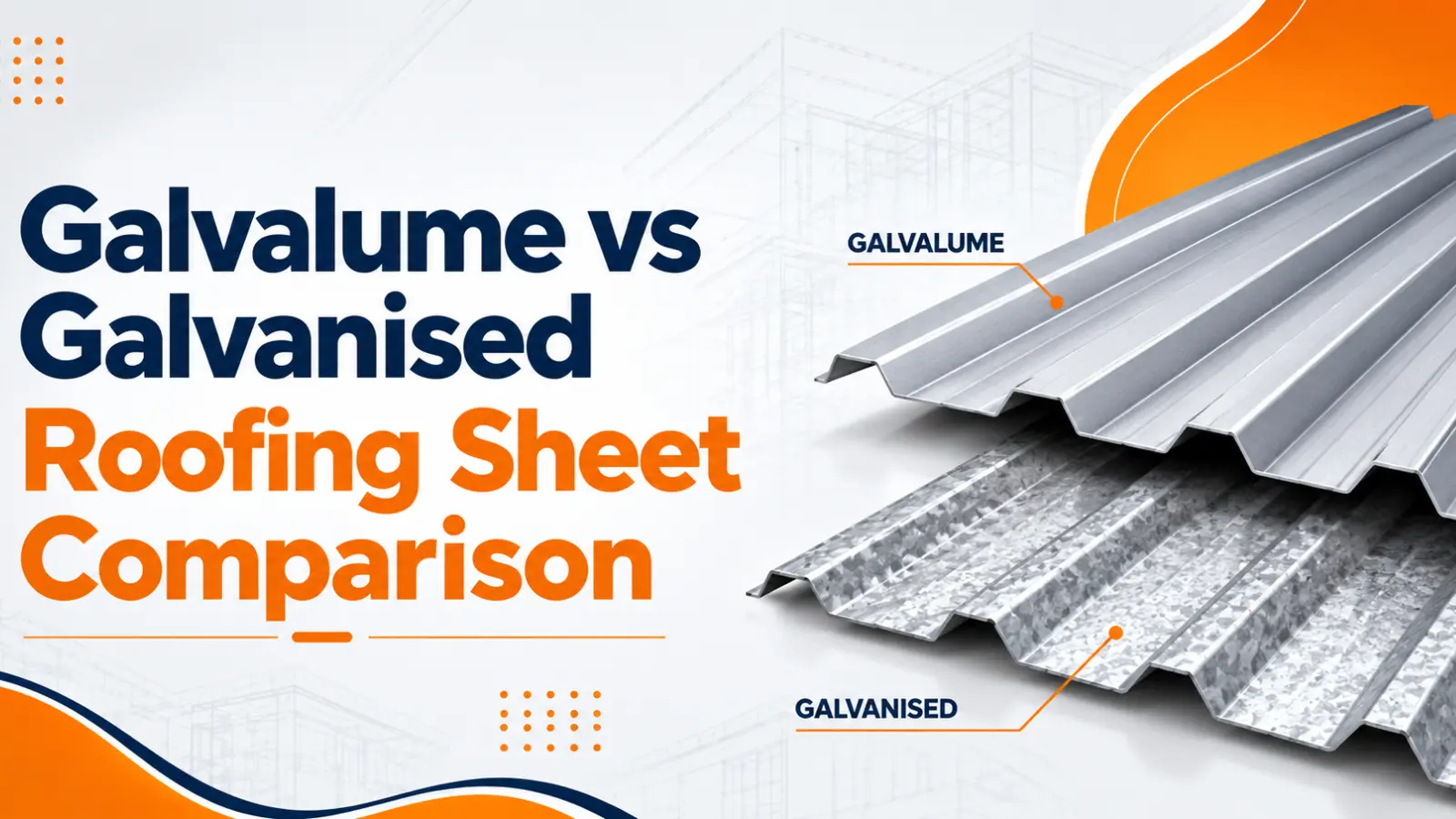
Choosing the right roofing sheet is one of the most important decisions for any industrial, commercial, or residential project. The roof protects the building from harsh weather, improves structural durability, and reduces maintenance costs over time. However, with multiple roofing materials on the market, selecting the right option can be confusing.
One of the most common debates among builders, contractors, architects, and property owners is the comparison between Galvalume and Galvanised roofing sheets. While both roofing sheets are made of steel and offer excellent corrosion resistance, they differ in coating composition, lifespan, heat resistance, appearance, and ideal applications.
Understanding these differences can help you choose a roofing solution that matches your budget, environmental conditions, and long-term performance expectations. This guide explains everything you need to know in simple terms.
What Are Galvanised Roofing Sheets?
Galvanised roofing sheets are steel sheets coated with a layer of zinc. This zinc coating acts as a protective barrier, preventing moisture from reaching the steel surface and thereby reducing the risk of rust and corrosion.
The galvanisation process usually involves hot-dip coating, where the steel sheet is immersed in molten zinc. The resulting protective layer sacrifices itself over time, protecting the underlying steel even if minor scratches occur.
Key Features of Galvanised Roofing Sheets
- Pure zinc protective coating
- Good resistance against rust
- Strong structural strength
- Cost-effective roofing solution
- Suitable for moderate weather conditions
- Widely used across industrial, commercial, agricultural, and residential buildings
What Are Galvalume Roofing Sheets?
Galvalume roofing sheets are also steel sheets, but instead of a pure zinc coating, they are coated with a combination of aluminium, zinc, and silicon. Typically, the coating consists of:
- Around 55% aluminium
- Around 43.4% zinc
- Around 1.6% silicon
This unique coating combines the corrosion resistance of aluminium with the sacrificial protection of zinc. As a result, Galvalume roofing sheets generally last longer and perform better in challenging environments.
Key Features of Galvalume Roofing Sheets
- Aluminium-zinc alloy coating
- Superior corrosion resistance
- Excellent heat reflectivity
- Longer service life
- Attractive silver finish
- Low maintenance requirements
Corrosion Resistance: Which Performs Better?
Corrosion resistance is often the deciding factor when choosing roofing materials.
Galvanised Roofing Sheets
The zinc coating protects steel by corroding before the steel itself. This process, known as sacrificial protection, helps extend the sheet’s life.
However, once a significant portion of the zinc layer wears away, corrosion can gradually affect the steel underneath.
Galvalume Roofing Sheets
Galvalume sheets offer enhanced protection because aluminium forms a stable protective barrier that slows down corrosion. At the same time, zinc provides sacrificial protection at exposed edges and scratches.
This dual protection allows Galvalume roofing sheets to perform exceptionally well in humid, rainy, and industrial environments.
For buildings exposed to frequent rainfall or moisture, Galvalume generally offers better long-term protection.
Heat Reflection and Energy Efficiency
Roof temperature directly affects indoor comfort and energy consumption.
Galvalume roofing sheets have a naturally reflective aluminium surface that reflects a significant portion of solar heat. This helps reduce roof temperature and can improve indoor comfort, especially during Indian summers.
Lower roof temperatures may also reduce dependence on cooling systems in commercial and industrial facilities.
Galvanised roofing sheets also reflect some sunlight but generally absorb more heat compared to Galvalume.
For warehouses, factories, manufacturing plants, and industrial sheds where temperature control is important, Galvalume offers a noticeable advantage.
Lifespan and Long-Term Durability
Durability plays a major role in the overall value of any roofing investment.
Galvanised roofing sheets provide reliable service for many years when installed correctly and maintained regularly. Their lifespan depends on factors such as climate, pollution levels, maintenance, and coating thickness.
Galvalume roofing sheets generally have a longer service life because their aluminium-zinc coating provides superior protection against corrosion and weathering.
They also retain their appearance for longer and require fewer repairs throughout their service life.
For projects where long-term performance is a priority, Galvalume often delivers better overall value despite its slightly higher initial cost.
Cost Comparison
Price is an important consideration for every construction project.
Galvanised roofing sheets are usually more affordable, making them an attractive choice for projects with limited budgets.
Galvalume roofing sheets generally cost more because of their advanced coating technology and longer lifespan.
However, when comparing lifetime costs, Galvalume often proves economical because it typically requires:
- Less maintenance
- Fewer repairs
- Lower replacement frequency
- Better long-term durability
Which Roofing Sheet Is Better for Different Applications?
The ideal roofing sheet depends on where it will be used.
Industrial Buildings
Large factories and manufacturing units benefit from Galvalume roofing sheets because of their excellent corrosion resistance, durability, and heat reflectivity.
Warehouses
Warehouses often require roofing that remains durable with minimal maintenance. Galvalume performs well in these conditions.
Agricultural Buildings
For poultry farms, dairy farms, storage sheds, and agricultural structures in normal environments, galvanised roofing sheets deliver reliable performance at an economical price.
Residential Buildings
Both roofing sheets are suitable for residential projects. Homeowners looking for a premium, long-lasting roofing solution may prefer Galvalume, while galvanised sheets remain an excellent budget-friendly choice.
Coastal Areas
Buildings located near the sea are exposed to salty air that accelerates corrosion.
Galvalume roofing sheets generally perform better in such environments due to their enhanced corrosion resistance, although the exact suitability depends on the specific exposure conditions and manufacturer’s recommendations.
Factors to Consider Before Choosing
Before making your final decision, consider the following:
- Local climate conditions
- Expected building lifespan
- Project budget
- Maintenance requirements
- Industrial or residential application
- Exposure to chemicals or pollution
- Coastal or inland location
- Future operating costs
Conclusion
The Galvalume vs Galvanised roofing sheet comparison ultimately comes down to your project’s specific requirements. Both roofing materials provide dependable protection, strong structural performance, and reliable durability.
Galvanised roofing sheets remain a practical and cost-effective option for many residential, agricultural, and commercial projects. On the other hand, Galvalume roofing sheets offer superior corrosion resistance, improved heat reflectivity, longer service life, and lower maintenance, making them a preferred choice for demanding industrial applications and long-term investments.
By evaluating factors such as climate, exposure conditions, maintenance expectations, and overall lifecycle cost, you can confidently select the roofing sheet that delivers the best value and performance for your building.